
- 23/06/2024
- Dr Vikrant Kale
- 0 Comments
- Proctology
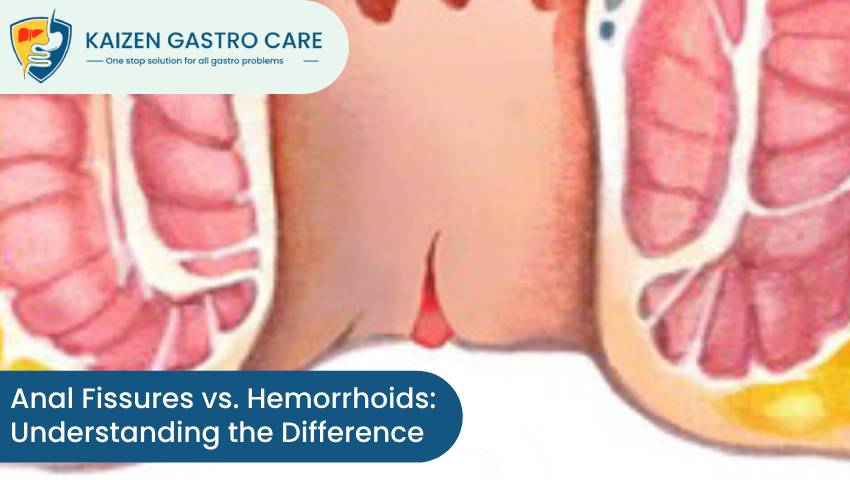
Anal Fissures vs Hemorrhoids: Understanding the Difference
Is This a Fissure or Piles? You're Not Alone
Pain and bleeding after passing stool — most people assume it’s piles. But often, it’s a fissure.
These two conditions are very common. They share some symptoms. But they are not the same thing. And treating the wrong one leads to more pain, more delay, and more problems.
This article answers three simple questions:
- What is the difference between a fissure and piles?
- How do you tell them apart from symptoms alone?
- When should you see a doctor?
At Best Gastroenterologist in Pune – Best Kaizen Gastro Care in Pune, Dr. Samrat Jankar — a leadingColorectal Surgeon in Pune — has successfully managed more than 2,000 cases of piles, fissures, and fistulas. This guide is based on that clinical experience.
What is the difference between fissure and piles?
- Anal Fissure — A small tear in the anal lining. Causes sharp, burning pain during and after passing stool. Pain can last 1–2 hours.
- Hemorrhoids (Piles) — Swollen veins near the anus. Causes dull pressure, itching, and a lump. Pain is more constant throughout the day.
Both can cause bright red bleeding after a bowel movement — but the type of pain and location tells them apart.
What Is an Anal Fissure?
What is fissure? A fissure is a small tear or cut in the lining of the anus. Think of it like a paper cut — small but very painful.
The medical term is fissure in ano. This fissure disease affects people of all ages — from infants to adults in their 40s.
Acute vs Chronic Fissure
Acute Fissure
- Fresh tear, less than 6 weeks old
- Heals with proper care and diet
- Bright red edges, no scarring
- More common, easier to treat
Chronic Fissure
- Tear persists beyond 6 weeks
- Develops a skin tag at the base
- Harder edges, reduced blood flow
- May need Botox or surgery
Causes of Fissures
- Hard, dry stools — the 1 cause of a painful fissure
- Straining too hard during bowel movements
- Chronic diarrhea — repeated irritation of the anal lining
- Low-fiber diet (common in urban India — maida, processed food)
- Tight anal sphincter muscle — reduces blood flow, delays healing
- Inflammatory bowel disease (Crohn’s disease)
- Childbirth — trauma during delivery
- Low water intake — drinking less than 2 litres per day
Signs of Anal Fissure — Fissure Symptoms
Pain Symptoms
- Sharp, cutting pain — pain during defecation
- Burning pain lasting 30 min to 2 hours after
- Burning sensation after passing stool
- Muscle spasm near the anus
Other Symptoms
- Bleeding while pooping — bright red on tissue
- Visible small tear or cut near the anus
- Skin tag or sentinel pile at tear site (chronic)
- Fear or avoidance of using the toilet
What Are Hemorrhoids (Piles)?
Hemorrhoids, commonly called piles, are swollen veins in the lower rectum or around the anus. They are not tears — they are enlarged blood vessels, similar to varicose veins in the legs.
Grade I
Swelling inside the rectum. No prolapse. Only symptom is painless bleeding. Does not require surgery.
Grade II
Prolapse during stool but returns on its own. Causes bleeding and mild discomfort.
Grade III
Prolapse that needs to be pushed back manually. Causes pain, bleeding, and itching.
Grade IV
Permanently prolapsed — cannot be pushed back. Requires laser or surgical treatment.
What Causes Piles?
- Straining during bowel movements — most common cause
- Chronic constipation or diarrhea
- Sitting for long periods (especially on the toilet)
- Pregnancy — increased pressure on pelvic veins
- Obesity — added pressure on the rectal area
- Low-fiber diet and low water intake
- Sedentary lifestyle — no regular physical activity
Symptoms of Piles and Fissures
Piles vs Fissure vs Fistula — The 3-Way Difference
Fissure
- A tear in the anal lining
- Sharp pain during stool
- Most painful of the three
Piles (Hemorrhoids)
- Swollen veins near anus
- Lump, itch, bleeding
- Can be internal or external
Fistula
- Infected tunnel near anus
- Pus or discharge, pain
- Always needs treatment
Hemorrhoids and Fissure Treatment — What Works?
Step 1 — Conservative Treatment (Works for Both)
- High-fiber foods — daliya, psyllium husk (isabgol), fruits, vegetables
- Drink 2.5–3 litres of water daily
- Sitz bath — sit in warm water for 15–20 minutes, 2–3 times a day
- Avoid straining on the toilet
- Do not hold the urge to pass stool
- Stool softeners — as prescribed by doctor
Specific Treatment for Anal Fissure
Medical Treatment
- Topical nitrate cream or diltiazem cream — relaxes the sphincter
- Botox injection — temporarily relaxes tight sphincter, promotes healing
- Lateral Internal Sphincterotomy (LIS) — minor surgery for chronic fissure
Laser Treatment at Kaizen Gastro Care
- Laser sphincterotomy — precise, minimal pain
- Daycare procedure — go home the same day
- Faster recovery than open surgery
Specific Treatment for Hemorrhoids (by Grade)
Grade I & II
- High-fiber diet + stool softeners
- Topical creams and suppositories
- Rubber band ligation or sclerotherapy
Grade III & IV
- Infrared coagulation
- Laser hemorrhoidectomy — advanced, minimal pain
- Stapler hemorrhoidopexy in severe cases
When to See a Doctor in Pune — Red Flags & Next Steps
Do not wait too long. See a specialist if:
- Bleeding during passing stool has lasted more than 2 weeks
- Pain is severe and not improving with home remedies
- You see a lump near the anus that is growing or getting harder
- There is fever, discharge, or pus near the anus (possible abscess or fistula)
- You are above 50 years of age — always get checked to rule out colorectal cancer
- You have tried home remedies for more than 3 to 4 weeks with no improvement
See the Best Piles and Fissure Specialist in Pune
At Kaizen Gastro Care, Wakad, Pune, Dr. Samrat Jankar and Dr. Vikrant Kale offer same-day consultations for anal fissure and hemorrhoid treatment. Dr. Jankar is a trained Colorectal Surgeon in Pune who has successfully managed more than 2,000 cases of piles, fissures, and fistulas.
Whether it is a painful fissure, Grade IV hemorrhoids, or a recurring fistula — the right diagnosis and the right treatment make all the difference.
Book your appointment today. Early treatment means faster relief.
📞 09763635252
🌐 Book an Appoinment