- 28/07/2026
- Dr Vikrant Kale
- 0 Comments
- Blogs
What Happens If Colon Polyps Are Not Removed?

Colon polyps are small growths that form on the inner lining of the colon. Most polyps are harmless. But some can turn into colon cancer if they are left untreated for a long time. This is why doctors always recommend timely diagnosis and treatment.
Many people ignore polyps because they do not cause pain in the early stage. This silent nature makes them dangerous. A simple colonoscopy can detect these polyps early and prevent bigger health issues later.
At Kaizen Gastro Care, our expert gastroenterologist team helps patients understand their colon health and guides them through safe, effective treatment. In this blog, we will explain what happens if colon polyps are not removed, and why early action matters.
What Are Colon Polyps?
Colon polyps are tiny clumps of cells that grow on the inside wall of the large intestine. Most polyps are small and do not cause any symptoms. Some polyps are non-cancerous. But certain types, called adenomatous polyps, can slowly turn cancerous over time.
Common risk factors include age above 50, family history of colon cancer, poor diet, obesity, smoking, and a sedentary lifestyle. If you fall into any of these categories, regular colon cancer screening is highly recommended.
The Process of Removal:
Doctors catch and remove most polyps during a routine colonoscopy using a minimally invasive technique called a polypectomy. A small wire loop or tool is passed through the camera tube to grab, cut, or burn off the polyp. It is a routine part of the exam, and the removal itself is typically painless.
This is one of the biggest advantages of a colonoscopy test . The doctor can spot the polyp and remove it in the same sitting. There is no need for a separate surgery in most cases. The patient can usually go home the same day and resume normal activities within a short time.
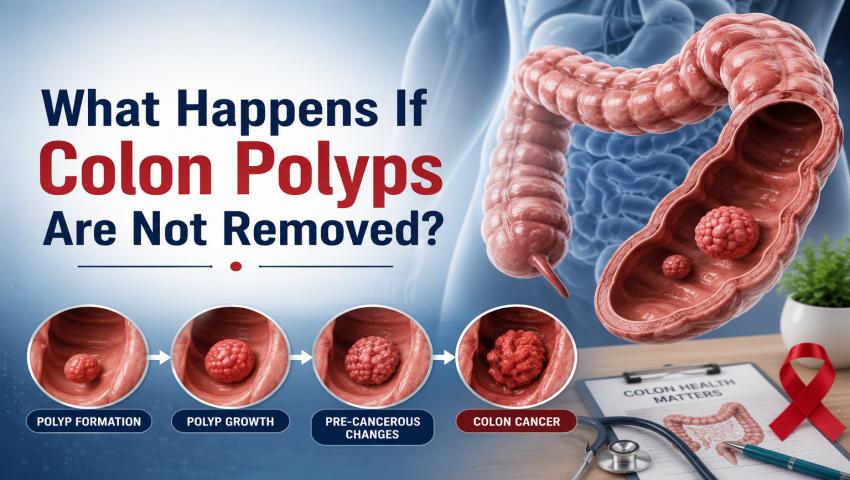
If colon polyps are not removed, they can grow over time and eventually turn into colorectal cancer. This growth does not happen overnight. It usually takes several years. But once it starts turning cancerous, treatment becomes more complex and may need the help of a colorectal surgeon.
What Happens If Colon Polyps Are Not Removed?
If colon polyps are not removed, they can grow over time and eventually turn into colorectal cancer. Not all polyps become cancer. But there is no scan or blood test that can tell doctors, in advance, which polyp will stay safe and which one will turn dangerous. Because of this uncertainty, doctors always recommend removing polyps as soon as they are found, rather than waiting and watching.
- The polyp keeps growing silently: Most polyps grow very slowly. It can take anywhere from 5 to 10 years for a small polyp to turn into cancer. But this growth never stops on its own. It keeps happening quietly, without any pain or warning sign. A person can feel completely healthy while the polyp keeps changing inside the colon.
- Normal cells slowly turn abnormal: Inside a polyp, the cells can slowly change from normal to abnormal. This process is called dysplasia. In the early stage, these changes are mild and easy to treat. But if the polyp is left untouched for years, the abnormal cells can multiply further and become more aggressive.
- The polyp can turn cancerous: Once the abnormal cells cross a certain stage, the polyp is no longer just a polyp — it becomes colorectal cancer. At this point, the cancer cells can start growing deeper into the wall of the colon.
- Cancer can spread beyond the colon: If it is still not caught, the cancer does not stay limited to the colon. It can spread into nearby lymph nodes, and later, into other organs like the liver or lungs. This is called metastasis, and it makes treatment much harder.
- Treatment becomes more complex and costly: A small polyp can usually be removed in minutes during a routine colonoscopy, with no cuts, no stitches, and same-day discharge. But once it turns into advanced cancer, treatment may need major surgery, chemotherapy, or radiation. The cost, the recovery time, and the risk to the patient all increase many times over.
- Lower chances of full recovery: Colorectal cancer caught in the early stage has a very high cure rate, often above 90%. But when it is caught late, after the polyp has been ignored for years, survival rates drop sharply. Early removal is literally the difference between a simple day-procedure and a life-threatening disease.
This is why colon polyps treatment at the right time is so important. Early removal during a colonoscopy stops the problem before it becomes serious.
Why Regular Screening Matters?
Colon cancer is one of the few cancers that can actually be prevented. Since most colon cancers start as polyps, removing them early stops cancer from ever developing. This is the real power of colon cancer screening.
Doctors generally recommend screening colonoscopy starting at age 45 to 50 for people with average risk. If you have a family history of colon cancer or polyps, your doctor may suggest starting earlier.
When Should You See a Doctor?
You should not wait for symptoms to appear. However, if you notice any of the following, please consult a specialist right away:
- Blood in stool or rectal bleeding
- Unexplained change in bowel habits
- Persistent stomach pain or cramping
- Unexplained weight loss
- Iron deficiency anaemia
A qualified Colorectal Surgeon or gastroenterologist can guide you on the right tests and treatment plan based on your individual risk factors.
Why Choose Kaizen Gastro Care for Colon Polyp Diagnosis and Treatment?
Kaizen Gastro Care is a trusted name for Colon Polyps Treatment in Pune. The clinic is led by two highly experienced specialists who bring a rare combination of medical and surgical gastroenterology expertise under one roof.
Together, Dr. Vikrant Kale and Dr. Samrat Jankar make Kaizen Gastro Care a complete destination for Colon Cancer Prevention, from screening to treatment, all under one roof, with advanced endoscopy equipment and a patient-first approach.
How Can I Keep My Colon Healthy?
You can lower your risk of colon polyps and colorectal cancer with a few simple, everyday habits:
- Eat more fibre, fruits, and vegetables
- Limit red meat and processed food
- Stay physically active and maintain a healthy body weight
- Avoid smoking and limit alcohol consumption
- Go for regular Colon Cancer Screening after the age of 45, or earlier if you have a family history
Small lifestyle changes, combined with timely screening, go a long way in protecting your long-term gut health.
Conclusion:
Colon polyps may look small and harmless, but ignoring them can lead to serious health issues, including colorectal cancer. The good news is that removing polyps early through a simple colonoscopy can prevent this risk completely.
If you are above 45, or have a family history of colon cancer, do not delay your screening. Book a consultation with the team at Kaizen Gastro Care today and take a simple step towards a healthier colon.
Frequently Asked Questions (FAQ's):
Yes, many people live with small polyps without knowing it, since they often cause no symptoms. But living with untreated polyps carries a risk, as some can turn cancerous over time. It is safer to get them removed once detected.
There is no fixed time. Most polyps take several years to turn into cancer. But the exact time depends on the type, size, and growth rate of the polyp. Doctors always advise removing polyps as soon as they are found, rather than waiting.
Kaizen Gastro Care is led by Dr. Vikrant Kale, a Senior Gastroenterologist, Hepatologist and Interventional Endoscopist with over 17 years of experience and more than 3000 colonoscopies performed. Dr. Samrat Jankar, a Surgical Gastroenterologist with 17+ years of experience, leads advanced laparoscopic and colorectal surgeries when needed. Together with a skilled team and advanced endoscopy equipment, Kaizen Gastro Care offers accurate diagnosis, safe polyp removal, and complete post-procedure care under one roof in Wakad, Pune.
How can I keep my colon healthy?
- Eat a fibre-rich diet with fruits, vegetables, and whole grains.
- Drink plenty of water every day.
- Exercise regularly to keep your digestive system active.
- Avoid smoking and limit alcohol intake.
- Maintain a healthy body weight.
- Go for regular colon cancer screening after the age of 45.
- Consult a gastroenterologist if you notice blood in stool, unexplained weight loss, or changes in bowel habits.
About the Author:
This blog is medically reviewed by the expert team at Kaizen Gastro Care, led by Dr. Vikrant Kale (Senior Gastroenterologist, Hepatologist & Interventional Endoscopist) and Dr. Samrat Jankar (Surgical Gastroenterologist). With combined experience of over 34 years and thousands of successful procedures, they are committed to providing accurate diagnosis and compassionate digestive care to patients across Wakad, Baner, Aundh, Hinjewadi, and the Pimpri-Chinchwad region of Pune.
For appointments, call 097636 35252 or visit www.kaizengastrocare.com.