
- 14/11/2024
- Dr Vikrant Kale
- 0 Comments
- Digestive Disorder
Top 10 Foods to Avoid with GERD
Do you feel a burning sensation in your chest after meals? Do you often get a sour taste in your throat?
You may be dealing with acid reflux — or its chronic form, GERD (Gastroesophageal Reflux Disease). The good news? What you eat makes a big difference. Making simple changes to your GERD diet can bring real relief — without medication alone. In this post, we share the top 10 foods to avoid with GERD, why they trigger symptoms, and what to eat instead.
At Kaizen Gastro Care Clinic, the best gastroenterology clinic in Pune, we prioritize educating patients about lifestyle modifications, especially food choices that can help reduce acid reflux symptoms.
What Is Acid Reflux and GERD?
Acid reflux happens when stomach acid flows back up into your food pipe (esophagus). This causes heartburn, bloating, and that familiar burning feeling. When this happens more than twice a week, it is called GERD. At the bottom of your esophagus, there is a small muscle called the Lower Esophageal Sphincter (LES). Think of it as a gate. When the gate stays closed, acid stays in your stomach. When it relaxes or weakens, acid escapes upward.
Certain foods relax this gate. Others increase acid production. Both make GERD worse.
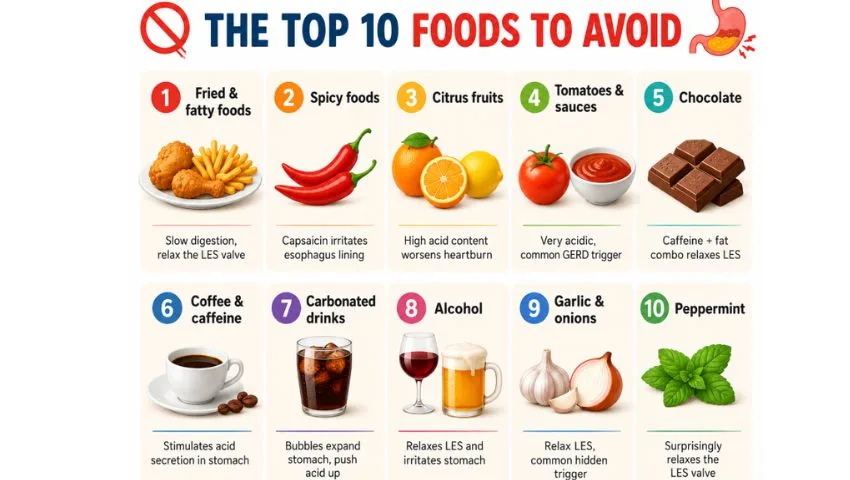
Top 10 Foods to Avoid with GERD
1. Fried and Fatty Foods
Fried foods are one of the worst foods for acid reflux.
French fries, fried chicken, pakoras — they all slow down digestion. Food sits in your stomach longer. This puts pressure on the LES and pushes acid upward.
High-fat meats like bacon and heavily marbled beef have the same effect.
- Swap with: Grilled chicken, baked fish, or steamed vegetables.
2. Spicy Foods
Spicy food is a very common acid reflux trigger food.
The compound capsaicin (found in chillies and hot sauces) can irritate the lining of your esophagus. A 2017 study found that hot, spicy meals triggered GERD symptoms in more than half of people studied.
If you regularly get heartburn, it is safest to reduce spicy food.
- Swap with: Mild herbs like cumin, coriander, or turmeric for flavour.
3. Citrus Fruits
Oranges, lemons, limes, and grapefruit are highly acidic. They can directly irritate an already sensitive esophagus.
Many people wonder: “Is orange good for acidity?” The answer is — not if you have GERD. Their high acid content often worsens symptoms.
- Swap with: Bananas, melons, or pears — all low-acid, GERD-friendly fruits.
4. Tomatoes and Tomato-Based Foods
Tomatoes are another acidic food to avoid with GERD.
This includes tomato sauce, ketchup, pasta sauce, and pizza. Even one serving can trigger a reflux episode in sensitive individuals.
- Swap with: Pesto or olive oil-based sauces for pasta.
5. Chocolate
Chocolate is a double threat for GERD sufferers.
It contains caffeine and a compound called methylxanthine — both of which relax the LES. It is also high in fat. All three factors combined make chocolate one of the ten worst foods for acid reflux.
- Swap with: A small serving of banana with peanut-free granola as a sweet treat.
6. Coffee and Caffeinated Drinks
Coffee stimulates your stomach to produce more acid. It also relaxes the LES.
Even decaf coffee can cause reflux in some people, as the coffee itself (not just caffeine) may be the trigger.
If you cannot give up your morning drink, try switching to ginger tea or chamomile tea — both are gentler on the stomach.
- Swap with: Herbal teas, warm water with honey, or coconut water.
7. Carbonated Drinks
Sodas, fizzy drinks, and energy drinks are a common but overlooked GERD trigger.
The bubbles expand inside your stomach. This creates pressure and pushes acid up toward the esophagus. Carbonated drinks are also often acidic and high in sugar — both of which worsen GERD.
- Swap with: Plain water, coconut water, or non-citrus fruit-infused water.
8. Alcohol
Alcohol relaxes the LES directly. It also irritates the stomach lining and increases acid production.
Beer, wine, and spirits can all trigger reflux. If you drink regularly and have GERD, reducing alcohol is one of the most effective GERD prevention steps you can take.
- Swap with: Mocktails using mint, cucumber, and water, or sparkling water alternatives.
9. Garlic and Onions
These are common ingredients in Indian cooking — but they are well-known GERD-triggering foods.
Both garlic and onions relax the LES, especially when eaten raw. Cooked versions may be tolerated better by some people.
Keep a food diary for two weeks to see if these trigger your symptoms personally.
- Swap with: Small amounts of ginger or asafoetida (hing) for flavour.
10. Peppermint
This one surprises many people.
Peppermint tea and peppermint-flavoured foods are often marketed as digestive aids. But for GERD sufferers, peppermint actually relaxes the LES, making acid reflux worse.
If you have GERD, avoid peppermint tea and peppermint-flavoured sweets or chewing gum.
- Swap with: Ginger tea or plain warm water after meals.
What Should You Eat for Acid Reflux?
Here are some of the best foods for acid reflux that are easy to include in your daily diet:
- Banana — One of the best fruits for GERD. Low acid, easy to digest, and soothing for the stomach. Many people find bananas for acid reflux very effective as a quick snack.
- Oatmeal — A high-fibre food that absorbs stomach acid. Great for breakfast.
- Boiled rice or khichdi — Gentle on the stomach and non-acidic.
- Curd (in moderation) — Many patients ask: “Is curd good for acid reflux?” In small amounts, curd can be helpful for some people due to its probiotic content. However, full-fat dairy may worsen symptoms in others. Start with small amounts.
- Green vegetables — Broccoli, green beans, peas, and spinach are all excellent non-acidic foods.
- Ginger — A natural antacid food. Ginger tea or ginger in cooking may help reduce stomach inflammation.
- Whole grains — Brown rice, quinoa, and whole wheat bread are great for a GERD diet plan.
Simple Lifestyle Tips to Prevent GERD
Diet alone is not everything. These daily habits also help prevent acid reflux:
- Eat smaller meals. Large meals increase stomach pressure and trigger reflux.
- Do not lie down after eating. Wait at least 2–3 hours before sleeping.
- Sleep on your left side. This position reduces nighttime acid reflux.
- Lose excess weight. Extra weight puts pressure on the stomach.
- Stop smoking. Smoking weakens the LES significantly.
- Wear loose clothing. Tight clothes increase abdominal pressure.
Conclusion:
Diet changes help many people manage GERD symptoms. But if your symptoms are frequent, severe, or not improving — do not ignore it.
Untreated GERD can lead to complications like esophagitis or Barrett’s esophagus. Kaizen Gastro Care, based in Wakad, Pune, is led by Dr. Vikrant Kale and Dr. Samrat Jankar — two of Pune’s most experienced gastroenterologists. They provide personalised GERD treatment, diet plans, and complete digestive care.
Visit Kaizen Gastro Care, Wakad, Pune
Frequently Asked Questions
Plain water, coconut water, ginger tea, and chamomile tea are all good options. Avoid coffee, cola, and alcohol.
Yes. Bananas are low in acid and are one of the best fruits for acid reflux relief.
Aloe vera juice and carrot juice are among the most soothing options. Avoid citrus juices like orange or lemon juice.
Milk may feel soothing in the moment, but full-fat milk can worsen symptoms later. Low-fat or plant-based milk is a better option for GERD patients.
Eggs are generally well tolerated. However, fried or heavily spiced eggs may trigger symptoms. Boiled or poached eggs are safer choices.
Follow a GERD diet, eat smaller meals, avoid trigger foods, stay active, and maintain a healthy weight. These acid reflux lifestyle changes make a significant difference.