
- 17/04/2026
- Dr Vikrant Kale
- 0 Comments
- Gut Health
What Is the Difference Between Colon Polyps and Cancer?
Introduction: Why Understanding Colon Polyps vs. Cancer Matters
Colorectal health is one of the most important — and most overlooked — aspects of overall wellbeing in India today. Whether you are experiencing changes in bowel habits, rectal bleeding, or simply want a routine health check-up, knowing the difference between colon polyps and colorectal cancer can literally save your life.
At Kaizen Gastro Care Clinic, PCMC, Pune, two of the most trusted specialists in the field are at your service:
Dr. Samrat Jankar — Gastroenterologist in Pune and Colorectal Surgeon in Pune, Director & Head of the Department of Surgical Gastroenterology. With over 17 years of experience in advanced laparoscopic and colorectal surgeries, Dr. Samrat Jankar has successfully managed more than 5,000 cases of piles, fissures, and fistulas, making him highly experienced in advanced Colon Polyps Treatment in Pune and Colorectal Cancer Treatment in Pune.
Dr. Vikrant Kale — Stomach Specialist in Pune and best Gastroenterologist in Pune, Director & Head of the Department of Medical Gastroenterology at Kaizen Gastro Care Clinic. Dr. Kale has performed 5,000+ gastroscopies, 3,000+ colonoscopies, and 1,000+ ERCP procedures, making him highly experienced in advanced Colonoscopy in Pune.
What Are Colon Polyps? — Definition and Types
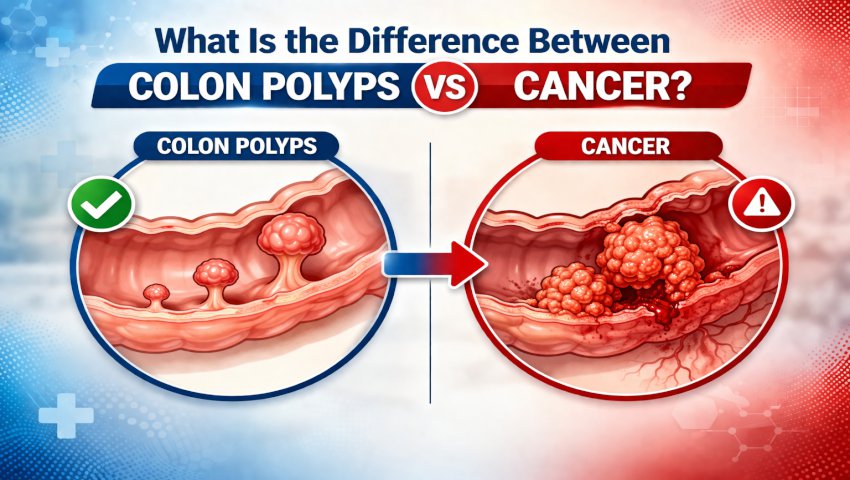
So, what is a polyp? To define polyps in colon terms: a colon polyp is an abnormal tissue growth that develops on the inner lining of the large bowel (colon or rectum). Think of it as a small bud or knob that forms on the colon wall. Most people have no symptoms at all — polyps are often discovered only during a colonoscopy for polyps done as part of routine screening.
As Dr. Vikrant Kale explains: “Polyps — or what we sometimes call ‘kali’ (buds) — start forming due to a combination of environmental and genetic factors. Once formed, a simple polyp takes roughly 5 to 10 years to potentially progress into cancer. That window of time is very valuable — because it gives us a chance to act.”
Types of Large Bowel Polyps:
Not all large bowel polyps carry the same risk. Here are the main types:
- Adenomatous Polyps (Tubular, Villous, Tubulovillous) — These are precancerous polyps and are the most clinically important. Adenomatous polyps, also called adenomas, carry a real risk of turning into colorectal cancer if left untreated. The villous type carries the highest risk.
- Hyperplastic Polyps — Usually benign and unlikely to become cancerous. However, they should still be monitored.
- Sessile Serrated Polyps — What is a sessile polyp? A sessile polyp is a flat, broad-based growth without a stalk. Sessile serrated polyps have a low but genuine cancer risk, especially when larger in size.
- Inflammatory Polyps — These are linked to Inflammatory Bowel Disease (IBD) like Crohn’s disease or ulcerative colitis. Colonic polyposis — the presence of many polyps throughout the colon — is often seen in conditions like Familial Adenomatous Polyposis (FAP).
- Colon Polyps Symptoms:
Most colon polyps cause no symptoms at all. However, some people may notice:
- Rectal bleeding or blood in the stool
- Change in bowel habits (constipation or loose motions)
- Abdominal discomfort or cramping
- Mucus in stool
This is why colon polyps disease often goes undetected without a proper colonoscopy for polyps.
- Risk Factors for Colon Polyps
- Age above 45 years
- Family history of polyps or colorectal cancer
- High-fat, low-fibre diet — many patients ask, what foods cause polyps in the colon? Red meat, processed foods, and low-fibre diets are key culprits.
- Obesity and lack of physical activity
- Smoking and excess alcohol consumption
What Is Colorectal Cancer? — Definition and Stages
Colorectal cancer is a malignant tumour where abnormal cells grow uncontrollably and invade deeper layers of the colon wall — and eventually spread to other organs through blood or lymph. Unlike a benign polyp, a cancer has the ability to metastasize (spread beyond the colon).
The origin of most colorectal cancers is an untreated adenomatous polyp. Dr. Samrat Jankar explains: “If you have a polyp removed during colonoscopy, cancer is prevented. If left untreated, within 5 to 10 years that polyp can turn cancerous. That’s the time window we have — and we must use it.”
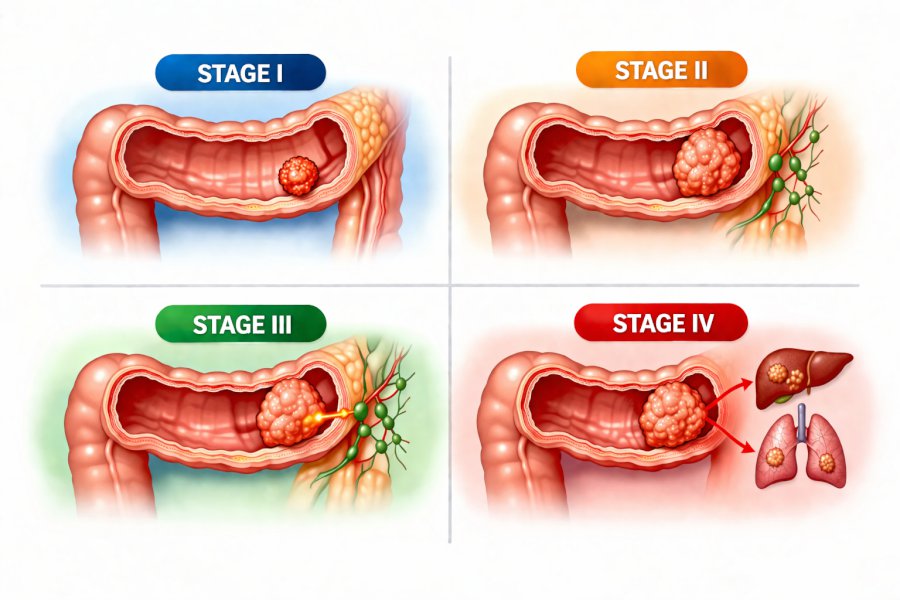
Stages of Colorectal Cancer (I–IV):
- Stage I: Cancer is confined to the inner layers of the colon — highly treatable.
- Stage II: Cancer has grown into the colon wall but not reached lymph nodes.
- Stage III: Cancer has spread to nearby lymph nodes.
- Stage IV (Metastatic): Cancer has spread to other organs like the liver or lungs.
- Colorectal Cancer Symptoms:
- Persistent rectal bleeding or blood in stool
- Unexplained weight loss
- Abdominal pain, cramping, or bloating
- Fatigue and anaemia
- Change in stool shape (thin, ribbon-like stools — polyp rectal symptoms advanced)
- Risk Factors for Colorectal Cancer:
- Untreated or missed adenomatous polyps or polypoidal growth
- Genetic conditions: Lynch Syndrome, Familial Adenomatous Polyposis (FAP) — also called intestinal polyposis
- Personal history of IBD
- Sedentary lifestyle, obesity, and unhealthy diet
Key Differences between Colon Polyps and Cancer
The Polyp-to-Cancer Progression: What You Must Know?
Understanding the adenoma–carcinoma sequence is key to preventing colorectal cancer altogether. Here is how the progression typically works:
- A small, benign polyp forms on the colon lining — often symptomless.
- Over 5 to 15 years, some polyps (especially adenomatous polyps) undergo changes and develop dysplasia (abnormal cell changes).
- Eventually, the polyp transforms into a polypoidal growth or polypoid growth with malignant potential — and then into frank cancer.
Factors that accelerate this progression include:
- Polyp size greater than 1 cm
- High-grade dysplasia
- Villous or tubulovillous features
- Multiple polyps (intestinal polyposis / colonic polyposis)
However — and this is the most important point — not all polyps become cancer. Most colorectal cancers start as polyps, but with timely colonoscopy for polyps and removal, cancer can be 100% prevented.
Diagnosis: How Are Colon Polyps and Colorectal Cancer Detected?
- For Colon Polyps:
- Colonoscopy (Gold Standard): A colonoscopy for polyps is the most reliable way to detect, visualise, and remove polyps in the same procedure. Dr. Vikrant Kale has performed over 3,000 colonoscopies in Pune alone.
- CT Colonography (Virtual Colonoscopy): A non-invasive imaging method for detecting large bowel polyps.
- Stool-Based Tests: Faecal immunochemical test (FIT) or stool DNA tests to detect blood or abnormal DNA.
- For Colorectal Cancer:
- Colonoscopy + Biopsy: To confirm malignancy in suspicious polypoidal growth or lesions.
- CT/MRI/PET Scans: For cancer staging and spread assessment.
- CEA Blood Marker (Carcinoembryonic Antigen): A tumour marker used to monitor treatment response.
A common question is: how many polyps are normal in a colonoscopy?
Ideally, zero. Even one adenomatous polyp requires follow-up. Finding and removing polyps early is exactly what makes colonoscopy such a powerful cancer prevention tool.
Treatment: Colon Polyps Treatment vs. Cancer Treatmen
Colon Polyps Treatment:
Treatment for colon polyps is straightforward when caught early:
- Polypectomy: The polyp is removed during colonoscopy itself — no surgery required. This is the most common and effective colon polyps cure.
- Surveillance Colonoscopy: After polypectomy, follow-up colonoscopies are scheduled to check for new polyps.
- Colon Polyps Treatment in Pune: Dr. Vikrant Kale at Kaizen Gastro Care Clinic specialises in advanced colonoscopy and endoscopic polypectomy procedures.
Colorectal Cancer Treatment:
Colon Cancer treatment is more complex and depends on the stage:
- Surgery (Colectomy): Removal of the affected portion of the colon — Dr. Samrat Jankar is a leading Colorectal Surgeon in Pune specialising in laparoscopic and minimally invasive colorectal surgeries.
- Chemotherapy: Used for Stage III and IV cancers, or as adjuvant therapy.
- Radiation Therapy: Especially used for rectal cancers.
- Targeted Therapy and Immunotherapy: Newer treatments available for advanced cancers.
Colon polyps treatment in pune (polypectomy) is far simpler, safer, and more effective than treating advanced colorectal cancer. This is the strongest argument for regular screening.
Prevention and Screening: Your Best Defence
Both Dr. Samrat Jankar and Dr. Vikrant Kale agree: early screening is the single most powerful tool to prevent colorectal cancer.
Screening Guidelines:
- Start colonoscopy screening at age 45 for average-risk individuals.
- Start earlier (age 40 or even younger) if you have a family history of colon polyps or colorectal cancer.
- If you have been diagnosed with colonic polyposis or intestinal polyposis (multiple polyps), more frequent follow-ups are needed.
Lifestyle Measures to Reduce Risk:
- Eat a high-fibre diet: fresh fruits, vegetables, whole grains, legumes — and avoid processed or red meat.
- Stay physically active.
- Maintain a healthy weight.
- Avoid smoking and limit alcohol consumption.
Conclusion: Polyps Are the Warning Sign — Don't Ignore Them
Colon polyps are the body’s early warning system. They are not cancer — but they can become cancer if ignored. The colorectal polyp definition is simple: an abnormal growth. But its implications are serious.
The good news? Colorectal cancer is one of the most preventable cancers in the world, thanks to colonoscopy. As Dr. Samrat Jankar and Dr. Vikrant Kale both emphasise: if you identify and remove a polyp in time, you can prevent cancer 100%.
Key takeaways:
- Most colon polyps are benign, but adenomatous polyps are precancerous.
- The adenoma-to-cancer window is 5–15 years — use this time wisely.
- Colonoscopy is the gold standard — it diagnoses and treats in one procedure.
- Colon polyps treatment (polypectomy) is simple, safe, and highly effective.
- Regular screening starting at age 45 is essential for all adults.
For expert Colonoscopy in Pune, Colon Polyps Treatment in Pune, or Colorectal Cancer Treatment in Pune, book your appointment with Dr. Samrat Jankar and Dr. Vikrant Kale at Kaizen Gastro Care Clinic, PCMC, Pune today.