
- 17/06/2026
- Dr Vikrant Kale
- 0 Comments
- Gut Health
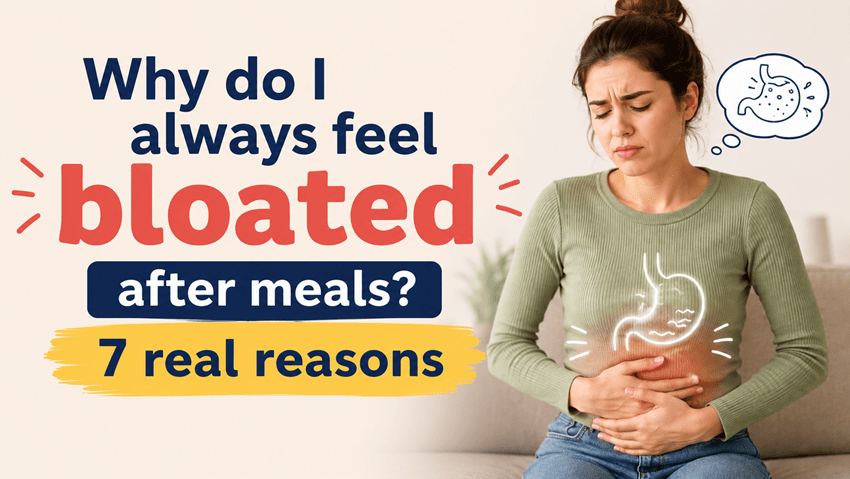
Why do I always feel bloated after meals? 7 real reasons
You finish your meal. You feel fine for a few minutes. Then it starts — that uncomfortable tightness, puffiness, and heaviness in your stomach. Sound familiar?
Bloating after eating is one of the most common digestive complaints in India. Almost everyone experiences it once in a while. But for many people, it happens after almost every meal — and that is when it becomes a real problem. Bloating is the feeling of excess gas or pressure building up in your stomach or intestines. Your belly may look swollen or feel tight. You may feel heaviness, pain, or a constant urge to pass gas. It can be mildly uncomfortable — or it can completely disrupt your day. If you are dealing with bloating after every meal, it is your body trying to tell you something. It could be about what you eat, how you eat, or an underlying digestive issue that needs attention.
At Kaizen Gastro Care, Pune’s trusted gastroenterology centre, Dr. Vikrant Kale and Dr. Samrat Jankar see many patients who suffer from regular post-meal bloating. The good news? Once the root cause is found, it can almost always be treated.
Let us look at the 7 real stomach bloating reasons behind your bloating — and what you can do about it.
What Causes Bloating After Eating? 7 Real Reasons
1. Eating Too Fast:
This is one of the most overlooked bloating reasons in daily life.
When you eat too fast, you swallow a lot of air along with your food. This air gets trapped in your stomach and intestines, leading to sudden bloating of the stomach and discomfort.
Fast eating also means your food is not chewed properly. Large food particles reach the stomach before it is ready to digest them. This slows digestion and causes gas to build up.
➤ What to do: Slow down. Chew each bite well. Put your spoon or fork down between bites. Give your body time to register that it is getting food.
2. Food Intolerances — Lactose and Gluten:
One of the biggest bloating causes is food intolerance — and many people do not even know they have one.
Lactose intolerance means your body cannot properly digest lactose, a sugar found in milk, paneer, curd, and other dairy products. When undigested lactose reaches the large intestine, bacteria break it down and produce gas. This causes bloating from food that contains dairy. Gluten sensitivity is another common trigger. Wheat, maida, and other grains can cause stomach bloating after eating in people who are sensitive to gluten.
If you notice that feeling bloated after eating happens specifically after dairy or wheat-based meals, a food intolerance could be the reason.
At Kaizen Gastro Care, Dr. Vikrant Kale recommends proper diagnostic tests to confirm food intolerances — rather than eliminating entire food groups based on guesswork.
3. Irritable Bowel Syndrome (IBS):
IBS is a very common condition — and bloating in the stomach is one of its most frequent symptoms. With IBS, the gut is more sensitive than normal. Even a regular meal can cause the intestines to react strongly. This leads to stomach bloating after eating, cramping, loose motions, or constipation.
Bloating gastric discomfort with IBS often worsens after spicy food, caffeine, fatty meals, or artificial sweeteners. IBS can be managed well with the right diet plan, stress management, and sometimes medication. But it needs a proper diagnosis first.
Many patients at Kaizen Gastro Care come in thinking they have “simple gas problems” — only to find out IBS was the actual cause all along. Dr. Vikrant Kale takes a thorough, evidence-based approach to diagnose and manage IBS effectively.
4. Poor Gut Bacteria Balance (Gut Dysbiosis):
Your gut has trillions of bacteria — both good and bad. When this balance is disturbed, it is called gut dysbiosis. And it is a major but hidden bloating belly cause.
When bad bacteria dominate, they produce too much gas while breaking down food. This leads to bloating after meals, a feeling of fullness even after eating very little, and sometimes foul-smelling gas.
Things that disturb gut bacteria include:
- Overuse of antibiotics
- A diet high in sugar and processed food
- Chronic stress and poor sleep
- Excessive alcohol consumption
Restoring gut health through the right diet, probiotics, and medical treatment can significantly reduce bloating and stomach discomfort over time.
5. Constipation:
This one surprises many people — but constipation is a very common stomach bloating reason.
When stool stays in your intestines for too long, it ferments. This fermentation produces gas. The gas cannot move forward easily because of the blockage, so it builds up and causes bloating of stomach after eating.
You may also notice that your stomach feels heavy after eating — even if you have eaten a small meal. This is because the bowel is already full and cannot efficiently process new food. If you pass stool fewer than 3 times a week, or if your bowel movement always feels incomplete, constipation could be behind your daily bloating.
Dr. Samrat Jankar at Kaizen Gastro Care regularly helps patients who have been struggling with chronic constipation for years — often without realising it was the root cause of their bloating tummy trouble.
6. GERD or Gastritis:
GERD and gastritis are two conditions that directly affect how your stomach handles food — and both cause bloating after eating.
In GERD, the valve between your food pipe and stomach does not close properly. Stomach acid flows back up. This causes heartburn, burping, and stomach bloating after eating. Gastritis is inflammation of the stomach lining. It can be caused by an H. Pylori bacterial infection, long-term painkiller use, or excess alcohol. When the stomach lining is inflamed, digestion slows down, gas builds up, and you are left with a bloated after eating feeling — along with nausea and upper stomach pain.
Both conditions are very treatable. A simple endoscopy or H. Pylori breath test at Kaizen Gastro Care can confirm the diagnosis quickly and accurately.
7. Gas-Producing Foods:
Some foods are naturally more likely to produce gas — and eating too many of them in one meal leads to bloating after every meal.
Common gas-producing foods in the Indian diet:
- Beans and lentils — rajma, chana, chole, moong dal
- Cruciferous vegetables — cauliflower, cabbage, broccoli
- Carbonated drinks — cold drinks, soda water
- Onions and garlic
- Fried and oily food
- Artificial sweeteners in diet drinks and sugar-free products
This does not mean you have to stop eating these foods entirely. But eating multiple gas-producing foods together in large portions is a direct bloating cause you can control. Stomach swelling after eating a heavy dal-chawal-sabzi meal is very common in Indian households — especially when eaten quickly, without enough water intake through the day.
How to Reduce Bloating?
Here are simple, practical steps to reduce bloating after meals:
- Eat slowly. Chew your food well. Do not rush.
- Avoid cold drinks during or after meals.
- Walk for 10–15 minutes after eating. Even a slow walk helps move gas through your gut.
- Eat smaller, more frequent meals rather than two very large ones.
- Do not lie down right after eating. Wait at least 30–45 minutes.
- Drink water between meals, not in large amounts during meals.
- Identify your trigger foods and reduce portion sizes gradually.
- Manage your stress. The gut-brain connection is very real. Stress directly worsens bloating gastric symptoms.
- Include probiotics — curd, buttermilk, and fermented foods support healthy gut bacteria.
These steps work well for occasional or mild bloating. But if your bloating after eating continues even after lifestyle changes, it is time to consult a Gastro specialist.
When Should You See a Gastroenterologist?
Occasional bloating from food is completely normal. But you should see a stomach specialist in Pune if:
- You experience bloating after every meal for more than 2–3 weeks
- You have stomach bloating after eating very little
- Bloating is accompanied by pain, vomiting, or fever
- You notice blood in stool or sudden weight loss
- Your stomach feels heavy after eating even small portions
- Your bowel habits have changed — frequent loose motions or constipation
- Over-the-counter medicines are not helping
These signs point to a deeper digestive condition that needs a proper medical evaluation. Ignoring persistent bloated reasons allows the underlying condition to worsen silently.
Conclusion — Get Expert Help for Persistent Bloating:
Bloating after meals is not something you have to simply live with. It is your body’s signal that something needs attention. At Kaizen Gastro Care, Wakad, Pune, Dr. Vikrant Kale and Dr. Samrat Jankar use advanced tools to find the exact cause — not just manage symptoms:
- Endoscopy
- Pylori Breath Test
- Hydrogen Breath Test
- Colonoscopy
- Gut Motility Studies
Book your appointment with Kaizen Gastro Care or call 09763635252. Do not ignore your gut. It knows something you should not miss.