
- 26/10/2026
- Dr Vikrant Kale
- 0 Comments
- Blogs
Thrombosed Piles: When Is Urgent Treatment Needed?
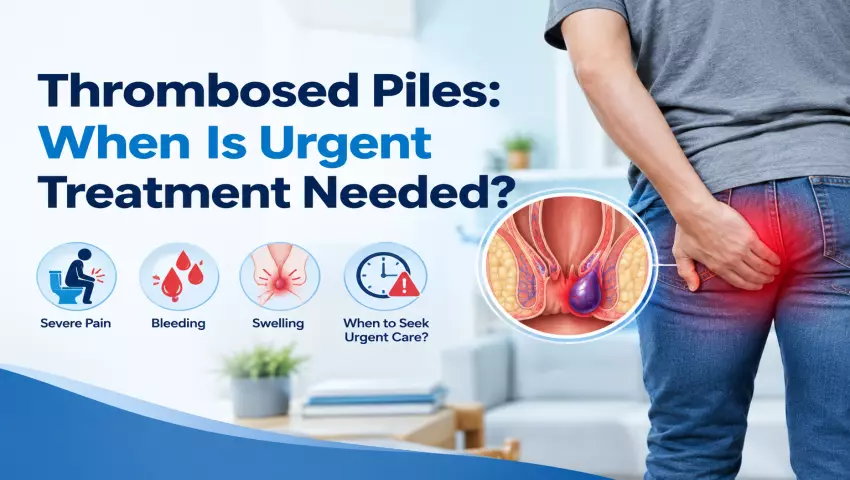
Thrombosed piles need urgent treatment when the pain is very severe, gets worse after 3 days, or comes with heavy bleeding, fever or trouble passing urine. A thrombosed pile is a blood clot inside an external pile. It forms a hard, painful, purple lump near the anus.
A sudden painful lump near the anus can feel scary. Many people feel shy and wait at home. But thrombosed piles are common, and they can be treated.
In this blog, you will learn the symptoms, causes, treatment options and recovery time. You will also know when to see a piles specialist. This guide is based on the clinical practice at Kaizen Gastro Care, Pune.
What Are Thrombosed Piles?
Piles are also called haemorrhoids. They are swollen blood vessels near the anus. External piles form under the skin around the anus.
Sometimes blood collects inside an external pile and forms a clot. This is called a thrombosed external haemorrhoid. Doctors also call it haemorrhoidal thrombosis. The clot stretches the skin and causes pain.
What Causes a Blood Clot in Piles?
The exact reason is not always clear. But these are common causes of thrombosed piles:
- Straining during bowel movements
- Constipation and hard stools
- Sitting on the toilet for a long time
- Long-term loose motions
- Heavy lifting or hard exercise
- Pregnancy and delivery
- Low fibre diet
- Sitting for long hours
Constipation and thrombosed piles often go together. Straining puts pressure on the veins near the anus. A small vein can burst and form a clot.
Thrombosed Piles Symptoms: Signs You Should Not Ignore
Symptoms usually start suddenly. Watch for these signs:
- Sudden anal pain that increases over a few hours
- A painful lump near the anus
- A hard lump around the anus, like a pea or a grape
- A purple or blue lump near the anus
- Swollen external piles with tenderness
- Severe pain during bowel movements
- Pain while sitting due to piles
- Itching or a feeling of fullness
- Bleeding from thrombosed piles, if the skin breaks
The pain is usually worst in the first 2 to 3 days. After that, it slowly reduces.
Thrombosed Piles: When Is Urgent Treatment Needed?
Do not wait at home if you notice any of these:
- Severe pain that does not reduce with simple painkillers.
- Pain increasing after 72 hours. Clot removal works best in the first 3 days.
- Heavy or repeated bleeding. A doctor must do a rectal bleeding assessment to rule out other causes.
- Fever, chills or pus. These can be signs of infection or abscess.
- Difficulty passing urine or stool because of swelling.
- A lump that keeps growing.
- Black stools, dizziness or weakness.
- Diabetes, low immunity or blood-thinner use. You should see a doctor early.
Remember, not every lump near the anus is a pile. It can also be an abscess, a skin tag or a growth. Only a doctor can tell the difference. This is called anal lump differential diagnosis.
Can Thrombosed Piles Heal on Their Own?
Yes, small ones often do. The body slowly absorbs the clot. This is called conservative management. It includes warm baths, stool softeners and pain relief.
But healing at home can be slow and painful. A small skin tag may also remain. If the pain is severe, it is better to see a doctor early.
How Long Does a Thrombosed Pile Take to Heal?
Many people ask, “How long do thrombosed piles last?” Here is the usual timeline:
- Pain relief: 3 to 7 days
- Lump becoming smaller: 2 to 4 weeks
- Full thrombosed piles recovery period: up to 6 weeks in some cases
After clot removal, pain settles faster. Recovery time depends on your health, food habits and bowel habits.
Thrombosed Piles Treatment Options:
Treatment Without Surgery:
Thrombosed piles treatment without surgery works well in mild cases. It includes:
- A warm sitz bath for piles, for 10 to 15 minutes, 2 to 3 times a day
- Stool softening and piles care with a laxative advised by your doctor
- More dietary fibre and plenty of water
- Medicines for thrombosed piles, like painkillers and soothing creams, as advised by your doctor
- Ice pack wrapped in a cloth for the first 1 to 2 days
These steps give thrombosed piles pain relief in most mild cases.
Surgical and Procedure-Based Options:
If the pain is severe, your doctor may suggest blood clot removal from piles. The options are:
- In-office elliptical excision (thrombectomy): The clot is removed under local anaesthesia. Relief is often quick.
- Open haemorrhoidectomy (Milligan-Morgan technique): Used for larger or repeated piles.
- Closed haemorrhoidectomy (Ferguson technique): The wound is closed with stitches.
- Energy-based haemorrhoidectomy (LigaSure or Harmonic Scalpel): Seals the blood vessels while removing the tissue.
- Stapled haemorrhoidopexy (PPH): Mainly for internal piles that come out.
- Laser haemorrhoidoplasty: Suitable for internal piles. If you are looking for LASER Piles Treatment, the doctor will first check if your type of piles is suitable.
The right choice depends on your examination. One clot usually needs only a simple excision, not a big surgery.
Thrombosed Piles vs Normal Piles: What Is the Difference?
What Should You Avoid If You Have Thrombosed Piles?
- Do not squeeze, cut or prick the lump at home. It can cause infection and heavy bleeding.
- Avoid straining on the toilet.
- Do not sit long on the toilet. Avoid using your phone there.
- Avoid heavy lifting for a few days.
- Do not use painkillers or steroid creams for long without a doctor’s advice.
- Avoid very spicy and oily food. Reduce tea and coffee.
- Do not delay a check-up if the pain keeps increasing.
How to Reduce Pain and Prevent Further Irritation?
- Take warm sitz baths regularly.
- Use a soft cushion while sitting.
- Clean gently with water. Avoid rough tissue.
- Eat fruits, vegetables, oats and whole grains.
- Drink 2 to 3 litres of water daily.
- Walk daily to keep your bowels regular.
- Go to the toilet as soon as you feel the urge.
Good constipation management is the best home care. A proper gut diet plan also helps.
Can Thrombosed Piles Come Back?
Yes, they can. Many patients ask, “Can thrombosed piles recur?” If constipation and straining continue, a new clot can form.
Prevention of thrombosed haemorrhoids is simple. Keep your stools soft. Eat enough fibre. Stay active. Do not strain. If piles keep coming back, you need a full check-up to find the root cause.
When Should You See a Doctor for Thrombosed Piles?
Many people try to manage a painful lump near the anus at home. This is fine for mild cases. But some signs mean you should not wait.
See a doctor soon if you notice:
- Severe pain that does not reduce with simple painkillers
- Pain that is getting worse after 3 days
- Heavy or repeated bleeding
- Fever, chills or pus from the lump
- A lump that keeps growing
- Difficulty passing urine or stool
- Black stools, dizziness or weakness
Get checked early if you also have:
- Diabetes or low immunity
- Regular use of blood thinners
- Pregnancy or recent delivery
- A lump near the anus for the first time
Not every lump is a thrombosed pile. It can also be an abscess, a skin tag or, rarely, a growth. Only a doctor can confirm this after a proper examination. So please do not guess, and do not try to cut or squeeze the lump at home. It can lead to infection and heavy bleeding.
Early treatment also helps. Clot removal works best in the first 2 to 3 days. After that, the pain often reduces slowly, but the lump can stay for weeks.
Conclusion: Recognising When Thrombosed Piles Need Urgent Care
Thrombosed piles cause sudden pain, but they can be treated. Mild cases improve with home care. Severe pain, heavy bleeding, fever or a growing lump need urgent attention.
Do not feel shy and do not wait too long. A quick check-up can save you many days of pain. Book a consultation with Dr. Samrat Jankar or Dr. Vikrant Kale at Kaizen Gastro Care today.
Frequently Asked Questions About Thrombosed Piles:
Thrombosed piles need urgent treatment when the pain is severe, lasts more than 72 hours, or comes with heavy bleeding, fever, pus or trouble passing urine. Black stools, dizziness or weakness also need immediate medical attention. People with diabetes or low immunity should see a doctor early.
Thrombosed piles are rarely dangerous, and many heal on their own in a few weeks. The body slowly absorbs the blood clot. But the pain can be very high, and a skin tag may remain. So early treatment from a piles doctor gives faster relief and avoids complications.
Thrombosed piles take about 3 to 7 days for pain to reduce. The lump may take 2 to 6 weeks to settle fully. Recovery is faster after clot removal. It also depends on your diet, bowel habits and overall health.
Yes, thrombosed piles can be treated without surgery in mild cases. Warm sitz baths, stool softeners, a high-fibre diet, ice packs and doctor-advised medicines help reduce pain and swelling. If the pain does not improve in 2 to 3 days, consult a doctor.
No, a thrombosed pile does not always need surgery. Surgery or clot removal is needed only when the pain is severe, the clot is large or the lump does not improve with home care. Most patients need only a simple procedure under local anaesthesia, not major surgery.
Clot removal by a doctor under local anaesthesia gives the fastest relief from thrombosed piles pain. It works best in the first 2 to 3 days. At home, take a warm sitz bath for 10 to 15 minutes, 2 to 3 times a day. Keep your stools soft with fibre and water.
Most often, yes. A hard, painful, blue or purple lump near the anus is usually a thrombosed external haemorrhoid. But an abscess, a skin tag or another growth can look similar. Only a doctor can confirm it after proper examination, so get it checked.
Yes, the skin over a thrombosed pile can break and bleed. This often reduces pressure and pain. Keep the area clean with water and use a clean cloth. If bleeding is heavy or does not stop, see a doctor at once.
Need help for piles in Pune? Consult Dr. Samrat Jankar (Surgical Gastroenterologist and Colorectal Surgeon) or Dr. Vikrant Kale (Senior Gastroenterologist) at Kaizen Gastro Care, Wakad. Call 097636 35252.