
- 28/09/2026
- Dr Vikrant Kale
- 0 Comments
- Digestive Disorder
What to Eat and Avoid for Acidity and Gas Problems?
Do you feel a burning sensation in your chest after meals? Does your stomach feel heavy, tight and bloated by evening? Do you burp again and again after dinner? You are not alone. Acidity and gas are among the most common digestive complaints in India.
The good news is that food plays a big role here. Small, smart changes in what you eat, how you eat and when you eat can bring real relief. Many patients at Kaizen Gastro Care, feel better within a few weeks of following the right diet.
This guide explains what to eat and avoid for acidity and gas problems. It also tells you why each food helps or harms, so you can make better choices every day.
What Causes Acidity and Gas Problems?
Your stomach makes acid to digest food and kill germs. This is normal. The problem starts when acid moves up into the food pipe (oesophagus). This causes heartburn, a sour taste in the mouth and a burning feeling behind the chest.
There is a small muscle ring between the food pipe and the stomach. It is called the lower esophageal sphincter (LES). It works like a door. When this door becomes weak or relaxes at the wrong time, acid escapes upward. Certain foods, such as chocolate, mint, alcohol and fried items, are known LES triggers.
Gas has different causes. You may swallow extra air while eating fast, talking while eating, or drinking through a straw. Some foods also produce gas when bacteria in the gut break them down. Lack of exercise and constipation can make it worse.
Other common causes include:
- Skipping meals or eating at irregular times
- Heavy, oily dinners followed by immediate sleep
- Stress and poor sleep
- Smoking, alcohol and too much tea or coffee
- Overweight, especially around the belly
- Some medicines, like painkillers
You may notice upper abdominal discomfort, frequent burping and gas, or post-meal bloating (postprandial fullness). If acid keeps touching the food pipe, it can also lead to stomach lining irritation and long-term problems like GERD.
What Foods Are Good for Acidity and Gas?
The best diet for acidity and gas is light, low in fat and rich in fibre. Such food leaves the stomach faster. So there is less time for acid to move upward.
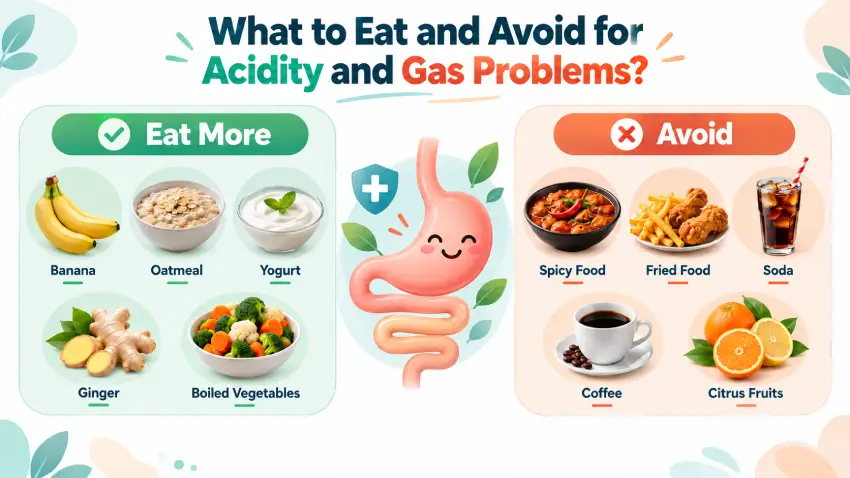
Gut-soothing foods calm the stomach and reduce burning. Examples are oats, bananas, cooked vegetables and curd. An anti-inflammatory digestive diet is also helpful. It is built on vegetables, fruits, whole grains, lean protein and healthy fats in small amounts. It limits fried, processed and sugary food that irritates the gut.
The idea is simple. Choose fresh, home-cooked, mildly spiced food. Avoid anything that is heavy, oily or very sour.
Best Foods to Eat for Acidity and Acid Reflux:
Alkaline foods for acid reflux have a higher pH. They help balance stomach acid and reduce the burning feeling. Add these foods to your daily plate:
- Oatmeal, daliya and brown rice: These are high in fibre. They absorb extra acid and keep you full.
- Bananas, papayas and melons: These acid-neutralizing fruits are gentle on the stomach. Papaya also has an enzyme called papain that helps digest protein.
- Lauki, carrot, pumpkin, spinach and beans (boiled or steamed): They are low in fat and easy to digest.
- Egg whites, fish and skinless chicken: Lean protein does not stay long in the stomach. Grill, boil or steam them instead of frying.
- Cucumber and coconut water: Both are cooling and hydrating.
- Almonds (a few, soaked): They make a good snack in small amounts.
Healthy fats like olive oil or a little ghee are fine in small quantities. Too much fat delays stomach emptying and increases reflux.
What to Eat When You Have Gas and Bloating?
Gas needs a slightly different approach. Here the aim is to keep food moving smoothly through the gut.
- Soluble fiber for bloating: Soluble fibre forms a soft gel in the gut. It makes stools soft and reduces trapped gas. Good sources are oats, peeled apples, carrots, sweet potato and psyllium husk (isabgol). Increase fibre slowly. A sudden jump can cause more gas.
- Natural carminatives: Carminatives are herbs that help release trapped gas and relax the gut. Indian kitchens already have many of them. Chew half a teaspoon of fennel (saunf) after meals. Add cumin (jeera) and ajwain to dal and sabzi. A pinch of hing in dal also helps.
- Probiotic-rich gut healing: Fresh curd and buttermilk (chaas) contain friendly bacteria. These support healthy digestion and may reduce bloating over time. Homemade options are best.
- Simple habits matter too. Eat slowly. Chew each bite well. Do not talk too much while eating. Avoid chewing gum and drinking through straws. All these reduce swallowed air.
Which Foods Should You Avoid for Acidity and Gas?
You do not need to give up all your favourite foods forever. But when symptoms are active, avoid these:
- Fried snacks, junk food and packaged items
- Very spicy curries, thick gravies and pickles
- Cola, soda and other fizzy drinks
- Too much tea and coffee
- Raw onion, cabbage, cauliflower and broccoli
- Maida products and sugary sweets
- Sugar-free gums and sweets made with sorbitol
- Large portions of rajma, chole and other heavy beans
Beans and pulses are healthy, but they contain sugars that cause gas. Soaking them overnight, discarding the water and cooking them well reduces this problem.
Indian Foods to Eat and Avoid for Acidity:
Indian meals are tasty, but oil and masala can worsen acidity. The good part is that small swaps work well. Use this quick guide:
Cooking style matters as much as the ingredient. Boiling, steaming and light sautéing are better than deep frying. Use less oil and mild masala. Reduce red chilli and garam masala on days when your stomach feels sensitive.
What Should You Eat for Acidity at Night?
Night acidity is very common. When you lie down, gravity no longer keeps acid in the stomach. So your dinner must be light.
Good dinner options include:
- Moong dal khichdi with a little ghee
- Vegetable soup with one or two rotis
- Roti with lauki or tori sabzi
- Daliya upma with vegetables
- A banana or a small bowl of papaya as a gentle snack
Avoid biryani, pizza, burgers, paneer butter masala and fried food at night. Also skip cold drinks and sweets after dinner.
Follow these habits as well:
- Finish dinner two to three hours before sleeping
- Do not lie down straight after eating
- Sleep on your left side, as this may reduce reflux
- Raise the head end of your bed by 6 to 8 inches
- Wear loose clothes at night
What Should You Drink for Acidity and Gas?
The right drink can calm stomach burning. The wrong one can undo your whole diet. Good choices are:
- Plain or lukewarm water: Sip through the day. Do not gulp too much water during meals.
- Coconut water: Cooling and gentle on the stomach.
- Buttermilk (chaas): Light, and good for gut bacteria. Add a pinch of jeera.
- Herbal teas for stomach burning: Ginger and chamomile teas may soothe the gut. Keep ginger mild, as too much can irritate some people.
- Fennel or jeera water: Boil the seeds in water and sip warm.
- Low-fat dairy alternatives for acidity: Almond milk or oat milk can be good options if regular milk troubles you.
Avoid cola, packaged fruit juices, energy drinks and alcohol. Also avoid tea or coffee on an empty stomach. Strong tea in the morning is a very common cause of morning acidity in India.
Can Meal Timing Affect Acidity and Gas?
Yes, meal timing has a big effect. When you stay hungry for long hours, acid keeps building in an empty stomach. This causes burning and gas. On the other hand, a very large meal stretches the stomach. It pushes acid upward into the food pipe.
Follow these simple rules:
- Do not skip breakfast
- Eat small meals every three to four hours
- Keep a fixed time for lunch and dinner
- Avoid eating late at night
- Do not lie down for at least two to three hours after meals
- Take a slow 10-minute walk after meals
A regular routine trains your gut. Over time, digestion becomes smoother and symptoms reduce.
Simple Diet Tips to Reduce Acidity, Gas and Bloating:
Here are some practical tips you can start from today:
- Eat slowly and chew every bite well
- Take smaller portions, but more often
- Cook with less oil and mild masala
- Drink water between meals, not in large amounts with meals
- Quit smoking and limit alcohol
- Manage stress with yoga, pranayama or deep breathing
- Stay active and maintain a healthy weight
- Do not take painkillers on an empty stomach
- Do not use antacids daily without medical advice
A sample day for acidity:
- Morning: Lukewarm water, then oatmeal or poha with a banana
- Mid-morning: Coconut water or a bowl of papaya
- Lunch: Two rotis, moong dal, lauki sabzi, cucumber salad and buttermilk
- Evening: Roasted chana or khakhra with herbal tea
- Dinner: Moong dal khichdi and vegetable soup, before 8:30 PM
Remember, diet alone may not fix everything. Some people have IBS, food intolerance or an infection like H. pylori. They need proper testing and a personalised plan.
When Should You See a Gastroenterologist for Acidity and Gas?
Diet changes help mild and occasional symptoms. But some signs should never be ignored. See a doctor if you have:
- Acidity or gas for more than two weeks despite diet changes
- Heartburn more than twice a week
- Difficulty or pain while swallowing
- Repeated vomiting
- Unexplained weight loss
- Black stools or blood in vomit
- Loss of appetite or feeling full after a few bites
- Chest pain (get emergency care first, as it may be a heart problem)
Ongoing symptoms may point to GERD, gastritis, stomach ulcers, H. pylori infection or a hiatus hernia. A stomach specialist can find the exact cause using proper tests like endoscopy. Early diagnosis prevents complications.
Conclusion: Choosing the Right Foods for Acidity and Gas Problems
Acidity and gas are common, but they should not control your life. Eat light, home-cooked meals and choose gut-soothing foods like oats, bananas, papaya and curd. Avoid fried food, cola and your personal triggers. Keep regular meal timings and choose smaller portions.
Most importantly, listen to your body. If symptoms continue for more than two weeks, do not depend only on home remedies or over-the-counter tablets. Get checked to find and treat the root cause. If you need expert guidance for persistent acidity, gas or digestive problems, you can book an appointment at Kaizen Gastro Care, for proper evaluation and personalised advice.
Frequently Asked Questions About Acidity and Gas Diet (FAQ's):
Oatmeal, bananas, papaya, lauki, fresh curd or buttermilk, and fennel are good choices. Keep meals light, low in fat and mildly spiced.
Avoid fried food, spicy curries, pickles, citrus fruits, tomatoes, chocolate, coffee, cola and alcohol. Also avoid large, heavy meals.
A ripe banana, a small bowl of oatmeal or a glass of cold low-fat milk may help. Sit upright and avoid lying down for at least an hour.
No food works instantly. Bananas, melons, oatmeal and coconut water may ease the burning. Antacids act faster, but use them only as advised by a doctor.
Warm water may give short-term relief, but it cannot cure acid reflux. Long-term relief needs diet changes, lifestyle changes and, if needed, medical treatment.
Cold low-fat milk may soothe the burning for a short time. Full-fat milk can worsen reflux in some people. Lactose intolerance can also cause gas and bloating after drinking milk.
Fresh, plain curd is good for most people because it has probiotics. Avoid sour or stale curd. If curd bothers you at night, have it in the afternoon.
Eat small meals, add fennel, cumin and ajwain to your diet, sip ginger or chamomile tea, walk after meals and manage stress. Also avoid smoking and late-night eating.
See a doctor if symptoms last more than two weeks, happen often, or come with weight loss, vomiting, black stools or trouble swallowing. Do not take acid-reducing tablets for months without medical advice.