
- 11/09/2023
- Dr Vikrant Kale
- 0 Comments
- GI Motility
FibroScan vs Biopsy: Comparing Liver Fibrosis Assessment Techniques
Liver health is the cornerstone of your overall well-being. When the liver gets damaged—whether due to fatty liver, alcohol, or viral infections—it tries to heal itself, leading to scarring known as liver fibrosis.
If you or a loved one are concerned about liver health, you have likely heard of two main tests: the FibroScan test and the liver biopsy. Deciding between a non-invasive scan and a traditional biopsy can be confusing. At Kaizen Gastro Care, our experienced team of gastroenterologists in Pune and hepatologists in Pune, Maharashtra, helps patients choose the right diagnostic path for their specific needs.
In this guide, we will break down everything you need to know about these tests for liver fibrosis to help you make an informed decision.
What is Liver Fibrosis?
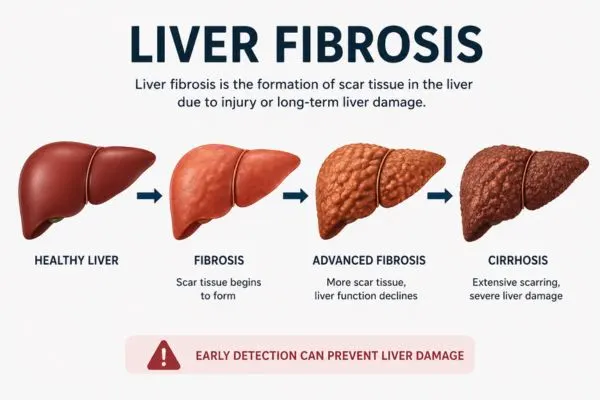
Liver fibrosis is the excessive accumulation of scar tissue in the liver. Think of it like a wound on your skin that leaves a scar. When the liver is constantly inflamed, the healthy cells are replaced by hard scar tissue.
If left untreated, fibrosis can progress to cirrhosis, which is severe scarring that can lead to liver failure or liver cancer. Finding out the level of scarring early through a liver score test is vital for recovery.
What is a FibroScan?
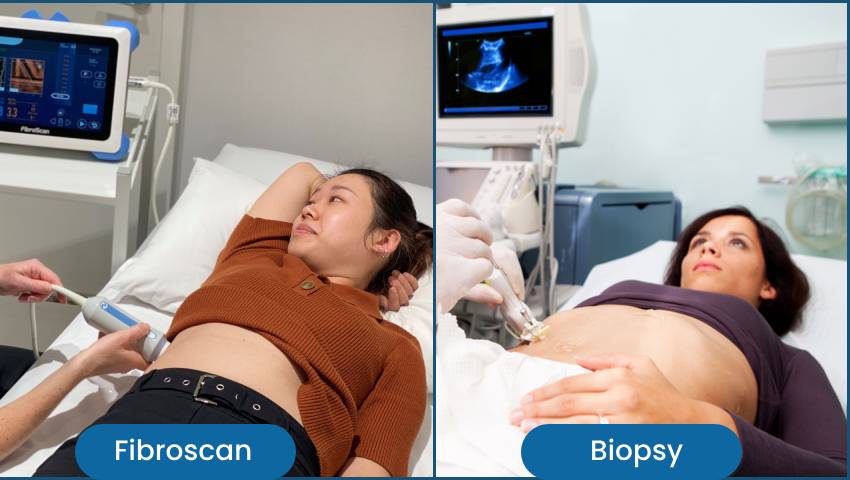
A FibroScan (also known as Transient Elastography) is a specialized, non-invasive ultrasound machine used to measure liver scarring. During a fibroscan of liver, a probe is placed on the skin over your liver area. It sends painless low-frequency sound waves through the organ.
This technology measures the liver stiffness measurement (LSM). The faster the sound wave travels, the stiffer (more scarred) the liver is. Simultaneously, it measures the CAP score (Controlled Attenuation Parameter), which indicates the amount of fat in the liver.
Benefits of FibroScan
- Non-Invasive: No needles, no incisions, and no pain.
- Quick: The entire fibroscan liver procedure takes only 10 to 15 minutes.
- Instant Results: You often get your fibroscan report immediately after the session.
- No Recovery Time: You can drive home or go back to work right after the test.
- Safety: Since there is no surgery, there is zero risk of bleeding or infection.
Limitations of FibroScan
While the fibroscan accuracy is generally high, it has some limitations:
- Body Mass Index (BMI): In very obese patients, the fat layer can sometimes interfere with the sound waves.
- Acute Inflammation: If the liver is currently very inflamed (e.g., active hepatitis), it might show a falsely high stiffness.
- Specific Conditions: It may not be as effective if there is fluid in the abdomen (ascites).
What is a Liver Biopsy?
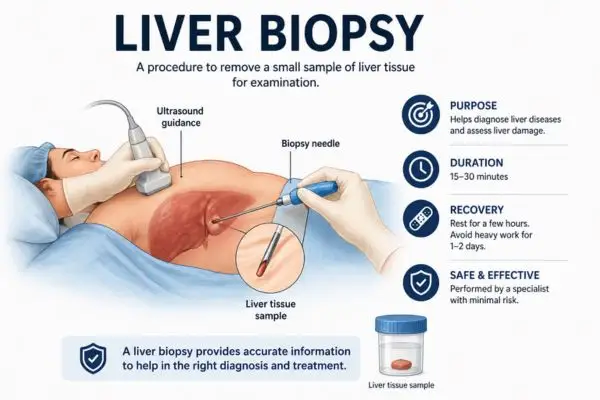
For decades, the liver biopsy was the “gold standard” for diagnosing liver disease. In this procedure, a doctor inserts a thin needle into the liver to remove a small piece of tissue. This sample is then examined under a microscope by a pathologist.
While a fibroscan vs biopsy debate exists, the biopsy provides a direct look at the liver cells, which can help diagnose rare diseases that a scan might miss.
Benefits of Liver Biopsy
- Detailed Analysis: It provides information on the cause of the disease, not just the amount of scarring.
- Microscopic View: It can detect inflammation, cell damage, and specific types of deposits (like iron or copper).
- Accuracy in Rare Cases: For autoimmune liver diseases, a biopsy is often still necessary.
Risks and Side Effects of Liver Biopsy
Unlike a fibroscan test, a biopsy is an invasive surgical procedure. Risks include:
- Pain: Most patients feel significant discomfort at the site of the needle.
- Bleeding: Internal bleeding is a rare but serious complication.
- Infection: Any time the skin is punctured, there is a small risk of infection.
- Hospital Stay: Patients usually need to be monitored for several hours after the procedure.
FibroScan vs Biopsy: Key Differences
FibroScan vs Biopsy: Which Test is Better for You?
The choice between liver biopsy vs fibroscan depends on your medical history.
If you have Fatty Liver (NAFLD) or Hepatitis B/C, a fibroscan of liver is usually the first and best choice because it is easy to repeat to monitor progress. However, if your doctor suspects a complex or rare liver condition, they might recommend a biopsy.
At Kaizen Gastro Care, our expert gastroenterologist in Pune will evaluate your symptoms and blood reports before suggesting the most appropriate test.
How to Read a FibroScan Report
Understanding your liver score test results is easier than you think. Your report will focus on two main numbers:
1. Liver Stiffness Measurement (LSM)
This is measured in kilopascals (kPa).
- Fibroscan normal range: Usually between 2.5 to 7.0 kPa.
- Mild Fibrosis: 7.0 to 9.5 kPa.
- Severe Fibrosis/Cirrhosis: Above 12.5 kPa.
- Bad fibroscan results: High kPa scores indicate advanced scarring.
2. CAP Score (Controlled Attenuation Parameter)
The cap score liver indicates the percentage of fat in your liver.
- CAP in fibroscan measures decibels per meter (dB/m).
- Liver cap score (Normal): Below 238 dB/m.
- S1 (Mild fatty liver): 238–260 dB/m.
- S2 (Moderate): 260–290 dB/m.
- S3 (Severe fatty liver): Above 290 dB/m.
Who Should Get Tested?
You should consider liver health checks if you:
- Have been diagnosed with Fatty Liver (NAFLD/NASH).
- Consume alcohol regularly.
- Have Type 2 Diabetes or Obesity.
- Have Hepatitis B or Hepatitis C.
- Notice a liver fibrosis in ultrasound report during a routine checkup.
- Experience unexplained fatigue or pain in the upper right abdomen.
Searching for a “fibroscan near me” is the first step toward preventing permanent liver damage.
Kaizen Gastro Care: Choosing the Right Technique
At Kaizen Gastro Care, patient care and accurate diagnosis are crucial. When it comes to assessing liver fibrosis, the choice between FibroScan and liver biopsy depends on particular patient factors and the clinical scenario. Our experienced team of gastroenterologists and hepatologists in Pune, Maharashtra, carefully assesses each case to determine the most appropriate method for liver fibrosis assessment.
- Individualized Care: We recognize that every patient is special, and we tailor our diagnostic approach accordingly. Some patients may benefit from the precision of liver biopsy, while others may find FibroScan to be a more convenient option.
- Follow-Up and Monitoring: For patients needing ongoing monitoring of liver fibrosis, FibroScan may be the chosen choice due to its non-invasive nature and ability to track differences over time.
Conclusion
Choosing between fibroscan vs biopsy doesn’t have to be scary. For the majority of patients, a fibroscan test provides all the information needed to start a treatment plan safely and affordably. It offers a clear cap score, an accurate liver stiffness measurement, and peace of mind.
Don’t wait for symptoms to worsen. Early detection is the key to reversing liver damage.
If you are looking for a reliable fibroscan of liver normal range assessment or need a consultation, visit Kaizen Gastro Care. Our experienced team of gastroenterologists and hepatologists in Pune, Maharashtra, is dedicated to providing world-class digestive care.
Take control of your liver health today. Contact Kaizen Gastro Care to book your appointment!
FAQs releted to FibroScan vs Biopsy
A FibroScan is a quick, non-invasive test used to check your liver’s health. It works like an ultrasound but specifically measures stiffness and fat in the liver.
- Non-Invasive: No needles, no pain, and no surgery.
- Fast: Takes only 10 to 15 minutes.
- No Downtime: You can resume your daily activities immediately.
- Purpose: It helps doctors at Kaizen Gastro Care detect fatty liver and scarring (fibrosis) early.
The CAP score measures the amount of fat in your liver.
- Normal Range: A score below 238 dB/m is considered healthy.
- Mild Fat (S1): 238 – 260 dB/m.
- Moderate Fat (S2): 260 – 290 dB/m.
- Severe Fat (S3): Above 290 dB/m.
To understand your report, focus on these two main values:
- LSM (Liver Stiffness Measurement): This is measured in kPa.
- Normal: 2.5 to 7.0 kPa.
- Fibrosis/Scarring: Above 7.0 kPa.
- Cirrhosis: Above 12.5 kPa.
- CAP Score: This is measured in dB/m. It tells you the percentage of fat in the liver (refer to the ranges above).
- IQR/Med Ratio: This should be less than 30%. It simply proves that your test was performed accurately.