- 22/09/2026
- Dr Vikrant Kale
- 0 Comments
- Liver Disorder
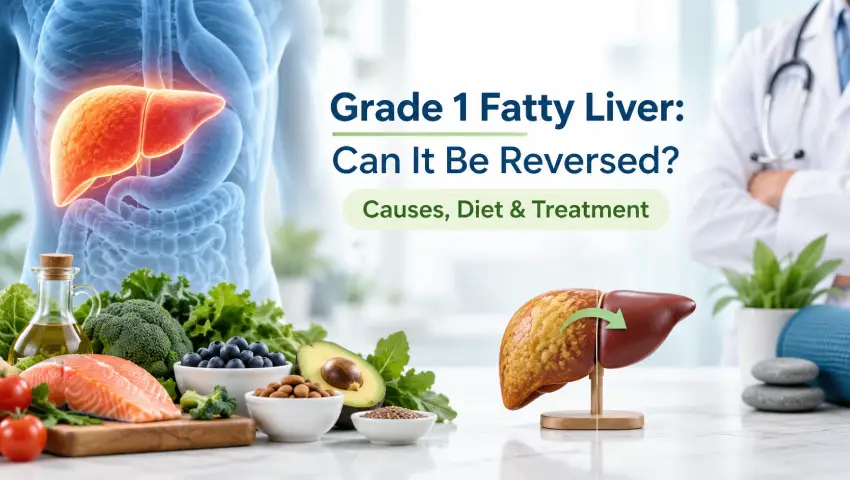
Grade 1 Fatty Liver: Can It Be Reversed? Causes, Diet & Treatment
Fatty liver is very common today. Many people find out about it during a routine health check-up. They go for a normal scan and suddenly see the words “Grade 1 fatty liver” on the report. This gives a shock to many patients. But there is no need to panic.
Grade 1 fatty liver is the mildest and earliest stage of fatty liver disease. It simply means your liver has started storing a little extra fat. It is not liver damage. It is a warning sign. Your body is telling you to make some changes before the problem grows bigger.
The good part is that this stage is fully manageable. With the right diet, some daily exercise and a few lifestyle changes, most people can reverse it completely. You do not always need medicines for this.
At Kaizen Gastro Care, we meet many patients every week with this same worry. Our doctors explain the condition in simple words, run the right tests, and guide each patient with a diet and treatment plan suited to their body. Dr. Vikrant Kale, our senior Hepatologist with 18+ years of experience, personally reviews such reports and helps patients understand exactly what their liver needs. This is why so many families trust us for reliable fatty liver disease treatment in Pune.
In this blog, we will explain everything about Grade 1 fatty liver in simple language – what it means, why it happens, what to eat, what to avoid, and when to see a doctor.
What Is Grade 1 Fatty Liver?
Grade 1 fatty liver means there is a small amount of extra fat stored in your liver cells. A healthy liver has little or no fat. But when fat builds up slowly, doctors call it fatty liver.
Doctors also call this the early or mild stage of Non-Alcoholic Fatty Liver Disease (NAFLD). The word “non-alcoholic” simply means the fat build-up is not caused by alcohol. It happens mainly because of diet, weight and lifestyle habits.
At Grade 1, the liver is not damaged. There is no scarring and no inflammation yet. It is simply carrying more fat than normal. This is why doctors consider it the safest stage to act on.
This condition is very common today. It is often seen in people who are overweight, who have diabetes, or who live a sedentary lifestyle with little physical activity. Many working professionals in cities like Pune get this diagnosis because of long sitting hours, stress and unhealthy food habits.
The good news is that early stage fatty liver treatment works best at this grade. The earlier you start, the faster and easier your recovery will be.
What Does Grade 1 Fatty Liver Mean on an Ultrasound?
On an ultrasound, the liver appears slightly brighter than usual. This brightness shows fat deposits inside liver tissue. A radiologist compares the brightness of your liver to your kidney, which usually stays normal. If the liver looks a little brighter than the kidney, it is graded as Grade 1.
The liver size and structure remain mostly normal at this stage. Blood vessels inside the liver can still be seen clearly on the scan. This is different from Grade 2 and Grade 3, where the liver looks much brighter, blood vessels become harder to see, and the liver may also look bigger in size.
Understanding your grade is important. It tells you and your doctor how much fat has built up, and how urgently you need to act.
What Causes Grade 1 Fatty Liver?
On an ultrasound, the liver appears slightly brighter than usual. This brightness shows fat deposits inside liver tissue. A radiologist compares the brightness of your liver to your kidney, which usually stays normal. If the liver looks a little brighter than the kidney, it is graded as Grade 1.
The liver size and structure remain mostly normal at this stage. Blood vessels inside the liver can still be seen clearly on the scan. This is different from Grade 2 and Grade 3, where the liver looks much brighter, blood vessels become harder to see, and the liver may also look bigger in size.
Understanding your grade is important. It tells you and your doctor how much fat has built up, and how urgently you need to act.
What Are the Symptoms of Grade 1 Fatty Liver?
Grade 1 fatty liver symptoms are usually mild or absent. Some people may notice:
- Mild fatigue
- Slight discomfort in the upper right abdomen
- Bloating
- Unexplained weakness
Because symptoms are so subtle, most cases are found only during a routine ultrasound or blood test. Many patients tell us, “Doctor, I felt completely fine, I never knew I had fatty liver.” This is exactly why fatty liver is called a silent condition. It grows quietly unless you get tested.
This is also why regular health check-ups after the age of 30, especially for people with diabetes, obesity or high cholesterol, are so important.
Can Grade 1 Fatty Liver Be Reversed?
Yes. Grade 1 fatty liver is reversible. This is the biggest advantage of catching it early. Since liver damage has not set in yet, the liver responds very well to diet and lifestyle correction.
The liver is a very forgiving organ. Unlike some other organs, it has the ability to heal and repair itself when given the right support. Once you reduce the fat load through diet, exercise and weight control, liver cells slowly return to normal.
Most patients see improvement within a few months of consistent effort. But the key word here is “consistent”. Skipping the diet on weekends or stopping exercise after two weeks will slow down your progress.
How Long Does It Take to Reverse Grade 1 Fatty Liver?
With disciplined diet, regular exercise and weight management, fatty liver recovery typically takes 3 to 6 months. Some patients see improvement even sooner. The exact time depends on your weight, activity level and how strictly you follow the diet plan.
Grade 1 Fatty Liver Diet: What Should You Eat?
A good Grade 1 fatty liver diet focuses on natural, whole foods. Include the following foods to eat for fatty liver:
- Green leafy vegetables like spinach and methi
- Whole grains such as jowar, bajra and brown rice
- Fruits good for fatty liver, like papaya, apple, and berries
- Nuts and seeds in small amounts
- Lean protein such as dal, sprouts, egg whites and fish
- Plenty of water through the day
These are among the best foods for liver health and help in liver fat reduction naturally.
Foods to Avoid With Grade 1 Fatty Liver:
Certain foods worsen fatty liver. Foods to avoid in fatty liver include:
- Deep fried snacks
- Sugary drinks and sweets
- White bread, maida and refined carbs
- Excess red meat
- Alcohol
- Packaged and processed foods
Best Indian Diet Plan for Grade 1 Fatty Liver:
Here is a simple Indian diet for fatty liver that fits easily into daily routine.
This fatty liver diet plan for Indians is easy to follow and rich in fibre, which supports natural liver detox.
Which Exercise Is Best for Grade 1 Fatty Liver?
Fatty liver and exercise go hand in hand. Regular movement helps burn stored fat and improves insulin sensitivity. Recommended options include:
- Brisk walking for 30-45 minutes daily
- Cycling
- Yoga and stretching
- Light strength training
Walking is one of the simplest and most effective ways to reduce fatty liver naturally, especially when done consistently.
Grade 1 Fatty Liver Treatment: Does It Need Medicine?
In most cases, Grade 1 fatty liver treatment does not require medicines. Fatty liver treatment without medicine, through diet and exercise, is usually enough. Many patients are surprised to hear this. They expect a long list of tablets, but for early stage fatty liver, lifestyle change is the real medicine.
However, if you also have diabetes, high cholesterol or high triglycerides, your doctor may prescribe medication to manage these related conditions alongside lifestyle changes. This is not for the fatty liver directly, but for the underlying condition that is contributing to it.
It is important not to self-medicate or take random supplements you see advertised online. Always consult a qualified doctor before starting anything.
When Should You See a Liver Specialist in Pune?
You should consult a liver specialist if:
- Your ultrasound shows fatty liver along with abnormal liver enzymes
- You have diabetes, obesity or high cholesterol
- You feel persistent fatigue or abdominal discomfort
- Your fatty liver is not improving despite diet changes
Timely consultation with a hepatologist helps prevent progression from mild fatty liver to more serious liver disease.
Grade 1 Fatty Liver Treatment in Pune at Kaizen Gastro Care:
At Kaizen Gastro Care, Clinic, we offer complete liver disease treatment in Pune under expert supervision. Dr. Vikrant Kale, a senior Gastroenterologist and Hepatologist with 18+ years of experience, provides expert NAFLD treatment in Pune and NASH treatment in Pune, backed by advanced diagnostics and personalised care plans.
Our team also includes Dr. Samrat Jankar, a skilled Surgical Gastroenterologist, and Dt. Bhushan Khedkar, our Gut Diet & Nutrition Specialist, who designs customised diet plans for fatty liver, obesity, diabetes and gut health. Together, our team offers complete fatty liver disease treatment in Pune, from diagnosis to diet counselling and follow-up care.
Conclusion:
Grade 1 fatty liver is common, mild and reversible. With the right diet, regular exercise and expert guidance, you can improve your liver health naturally. Do not wait for symptoms to worsen. Early action can help prevent the condition from progressing.
If you have been diagnosed with fatty liver, consider booking an appointment with the experienced gastroenterology and liver care team at Kaizen Gastro Care, Wakad, Pune. A timely consultation can help you understand your liver health, identify possible risk factors and receive a personalised treatment and lifestyle plan.
Frequently Asked Questions About Grade 1 Fatty Liver:
Yes, with consistent diet control, exercise and weight management, Grade 1 fatty liver can be completely reversed in most cases.
Grade 1 fatty liver is not dangerous by itself, but if ignored, it can progress to more severe stages, including NASH or liver damage.
Yes, brisk walking for 30-45 minutes daily helps burn liver fat and improves overall metabolic health.
Avoid fried food, sugary drinks, refined carbs, alcohol and processed snacks to support liver fat reduction.
Losing 5-10% of your body weight gradually can significantly reduce liver fat and improve liver function.
If left untreated for years, especially with diabetes or obesity, fatty liver can progress to NASH, fibrosis and eventually cirrhosis. Early treatment prevents this.