
- 18/10/2024
- Dr Vikrant Kale
- 0 Comments
- Digestive Disorder
Crohn’s Disease vs Ulcerative Colitis
Stomach pain, frequent visits to the washroom, and constant tiredness can disrupt your daily life. Often, these problems point toward Inflammatory Bowel Disease (IBD). But did you know that IBD is actually an IBD medical abbreviation (the IBD full form in medical terms is Inflammatory Bowel Disease)?
The two main types of this condition are crohn’s disease and ulcerative colitis. While they share similar symptoms, they affect your body differently. At Kaizen Gastro Care, the Best Gastroenterology Hospital in Pune, we see many patients who are confused about their diagnosis. Understanding the difference between crohn’s disease and ulcerative colitis is the first step toward getting the right care.
Let us look at how crohn’s disease vs ulcerative colitis compare, their symptoms, and treatment options.
What Is Crohn’s Disease and What Is Ulcerative Colitis?
To understand crohn’s disease and ibd, we must define both conditions separately.
What is crohn’s disease:
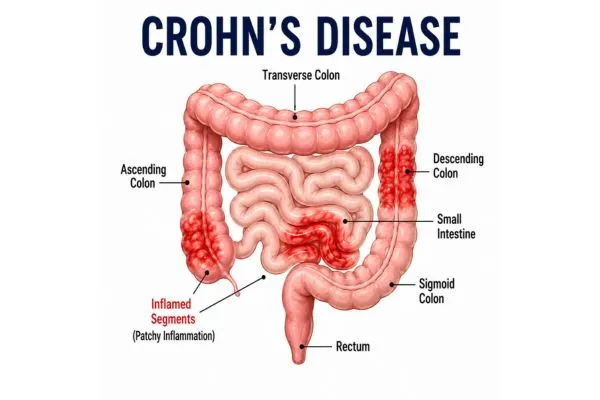
The crohn’s disease meaning refers to a chronic inflammatory condition that can affect any part of your digestive system. It can cause inflammation anywhere from your mouth to your anus. It often impacts the end of the small intestine.
What is ulcerative colitis:
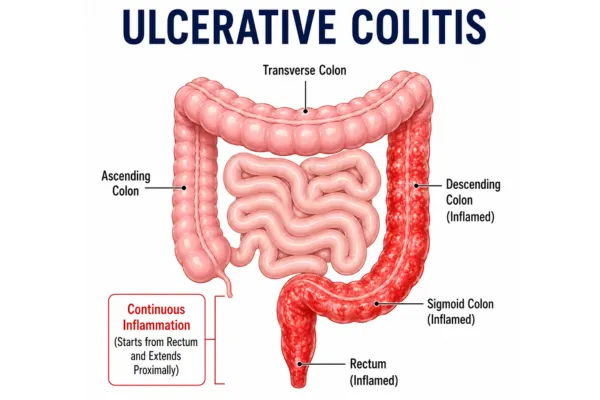
The ulcerative colitis meaning or definition of ulcerative colitis is a long-term condition that causes inflammation and ulcers (sores) only in the innermost lining of your large intestine (colon and rectum).
When you compare ulcerative colitis vs normal colon, a healthy colon has a smooth pink lining. A colon with colitis looks red, swollen, and covered in tiny bleeding sores. Both conditions fall under the umbrella of ibd crohn’s disease and ulcerative colitis.
Crohn’s Disease vs Ulcerative Colitis
When looking at crohn’s disease versus ulcerative colitis, doctors use specific features to tell them apart. Here is a master table highlighting the major differences between ulcerative colitis and crohn’s disease:
Affected Areas of the Digestive Tract: Crohn’s Disease vs UC
The area of attack is a major factor in crohn ulcerative colitis diagnostics.
In crohn’s disease vs uc, the location tells the whole story. As shown in the diagram above, crohn’s is patchy. You might have inflammation in your small intestine, a normal colon segment, and then inflammation again near the rectum. If it targets the lower part of the small intestine, it is known as ileitis crohn’s disease. If it involves both the colon and the small bowel, it is called ileocolitis crohn’s disease.
On the other hand, ulcerative colitis versus crohn’s disease shows a strict pattern. UC always starts from the rectum and moves upwards into the colon continuously. It never skips areas and never enters the small intestine.
Causes and Risk Factors of Crohn’s Disease and Ulcerative Colitis
Why do people get these conditions? The exact crohn’s disease cause and the cause for ulcerative colitis are still not fully known. However, it is an abnormal immune response where your body attacks its own gut cells.
Here are the main causes of ulcerative colitis disease and causes crohn’s disease:
Our team at Kaizen Gastro Care, led by top experts like IBD Specialist – Dr. Vikrant Kale, works closely with patients to identify these lifestyle and environmental triggers.
Symptoms Comparison: Crohn’s Disease vs Colitis
The crohn’s and ulcerative colitis difference is also visible in the daily symptoms patients experience. While both cause diarrhea and fatigue, some key symptoms stand out.
If you notice these signs, discussing crohn’s versus ulcerative colitis with a specialist becomes highly necessary.
How Are Crohn’s Disease and Ulcerative Colitis Diagnosed?
You cannot diagnose crohn’s disease or achieve an accurate ulcerative colitis diagnosis through simple blood tests alone. A proper medical evaluation is vital. To confirm if a patient is diagnosed with ulcerative colitis or Crohn’s, a gastroenterologist will perform:
- Colonoscopy: Inserting a thin tube with a camera to see the inside lining of your colon.
- Biopsy: Taking tiny tissue samples during a colonoscopy to check for deep transmural inflammation or surface ulcers.
- Imaging Scans: CT scans or MRI scans to map out the small intestine.
- Stool Tests: Checking for infections or high levels of inflammation markers.
At Kaizen Gastro Care, we have advanced diagnostic tools to pinpoint the exact crohn’s disease ulcerative colitis difference for an accurate treatment pathway.
Treatment Options for Crohn’s Disease and Ulcerative Colitis
Effective crohn’s disease and treatment plans depend on how severe your condition is. The medical approach focuses on reducing inflammation and giving your gut time to heal. Common treatments include:
- Anti-inflammatory Medicines: Aminosalicylates (5-ASAs) are widely used for mild to moderate colitis.
- Corticosteroids: Used for short periods to calm down severe flare-ups quickly.
- Immunomodulators & Biologics: Advanced therapies that target specific proteins causing the inflammation.
- Dietary Adjustments: Eating soft foods and avoiding triggers like dairy or heavy spices during a flare-up.
- Surgery: If medicines fail, surgery might be needed. For UC, removing the colon can resolve the disease. For Crohn’s, surgeons remove only the heavily damaged sections of the intestine.
Is IBD Curable? Can Crohn’s Disease or Ulcerative Colitis Be Cured?
A common question patients ask is: Is IBD curable?
Currently, there is no permanent cure for Crohn’s disease, meaning a crohn’s disease curable status does not exist yet. It is a lifelong condition, but it can be managed beautifully into long periods of remission (symptom-free phases).
So, can ulcerative colitis be cured? Since UC is limited only to the large intestine, removing the entire colon through surgery can technically resolve the intestinal symptoms. However, doctors only recommend surgery when medications stop working or life-threatening complications happen. Therefore, saying is ulcerative colitis curable or crohn’s disease is curable without surgery is not accurate. Long-term management is the gold standard.
Living With Crohn’s Disease and Ulcerative Colitis: Long-Term Management and Outlook
Being diagnosed with crohn’s and ulcerative colitis can feel overwhelming. However, with the right medical guidance, most patients live full, active lives.
- Take medications on time: Never skip your doses, even when you feel completely fine.
- Track your food: Maintain a food diary to note down what triggers your bloating or pain.
- Manage mental stress: High stress levels can cause your digestive system to flare up. Try yoga, meditation, or light walks.
- Regular health checks: Visit your doctor regularly to check your blood levels and track your gut healing.
When Should You See a Gastroenterologist?
If you are experiencing persistent stomach pain, unexplained weight loss, or blood in your stool, do not ignore it. Early intervention makes a world of difference in treating ibd abbreviation medical conditions.
You should consult a specialist immediately if your symptoms do not go away within a week or two. Getting an expert opinion from a best IBD Doctor in Pune ensures you get tailored treatment early.
At Kaizen Gastro Care, our dedicated team—including Dr. Vikrant Kale and Dr. Samrat Jankar—provides world-class care for all types of inflammatory bowel disorders. Book a consultation at Kaizen Gastro Care today to get your digestive health back on track!